Major BMW Safety Recalls Since 2010: PCV Heater, EGR Cooler, Takata, Water Pump | AutoDefect
AUTODEFECT.ORG BMW HVAC EVAPORATOR REGISTRY · INDEPENDENT
MY RECORD REPORT A FAILURE
Evidence before accusation
Source classes and case evidence levels are tracked separately. Every material claim states what it does — and does not — establish.
OPEN THE EVIDENCE CENTER →
Symptom ≠ diagnosis
Uneven vents, hissing or temporary post-recharge improvement are diagnostic clues — not proof the evaporator is the source.
READ THE DIAGNOSIS GUIDE →
Three cost layers, never blended
External benchmarks, documented estimates and completed invoices answer different questions — the registry keeps them separate.
SEE COST INTELLIGENCE →
Public record, plainly labeled
Recalls, settlements and complaints are different kinds of records. Each entry links its primary source and states its scope.
OPEN THE PUBLIC RECORD →
Statistics describe submitted records
They do not establish manufacturer-wide incidence or failure rates. Read how records are reviewed before publication.
VISIT THE DATA CENTER →
SEARCH AUTODEFECT.ORG
Prototype — search binds to Supabase full-text in the production build (see handoff-v4).
POPULAR SEARCHES
X5 G05 Evaporator replacement cost Passenger side warm 64119496922 BMW recalls Class action settlements R-1234yf leak
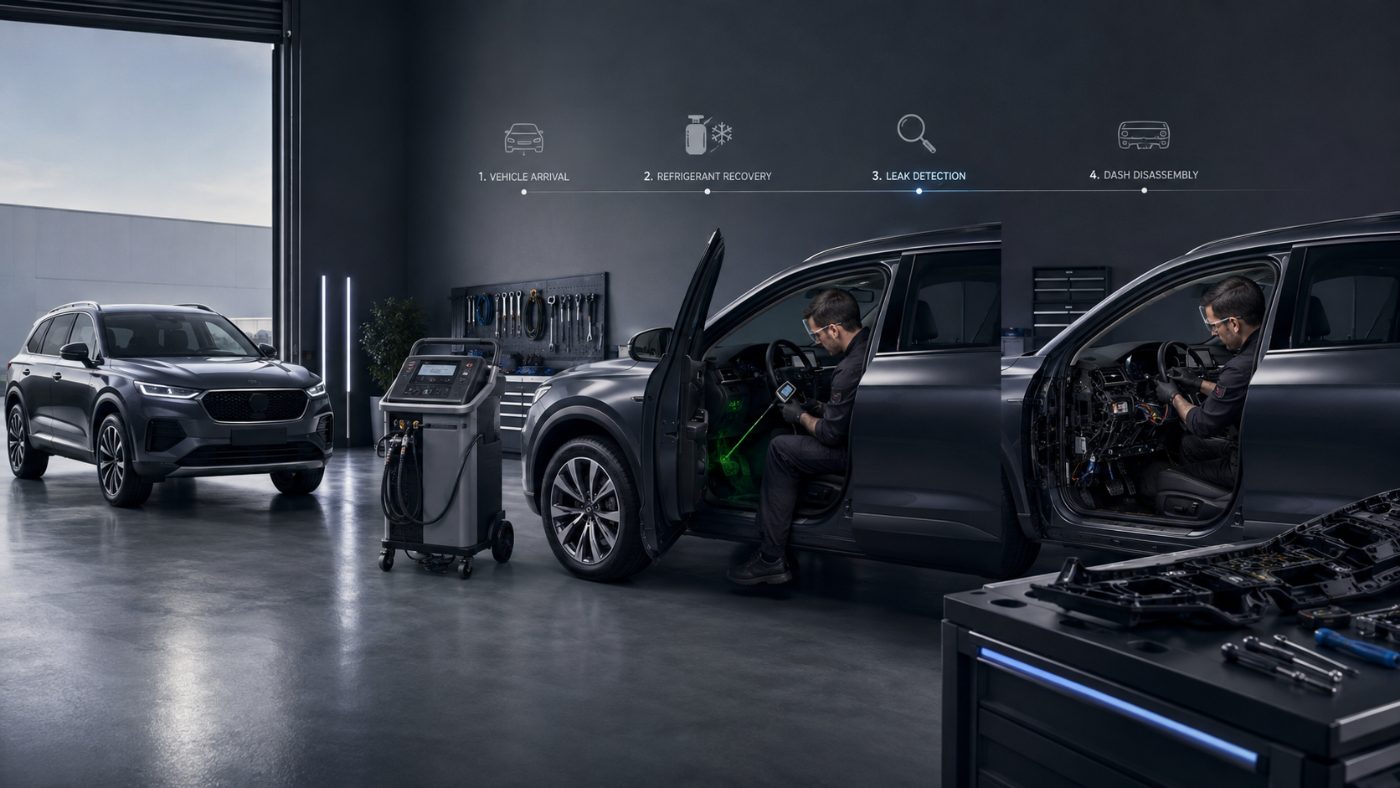
Vehicles staged in a service workshop for recall inspection
PUBLIC RECORD — SAFETY RECALLS

Major BMW Safety Recalls Since 2010

A reference record of the largest U.S. BMW recall campaigns of the past fifteen years — what was recalled, why, and what it shows about how safety defects surface, expand and get remedied. Compiled from NHTSA recall documents and mainstream reporting, with every entry linked to its source.

CHECK YOUR VIN — BMW ↗CHECK YOUR VIN — NHTSA ↗

LIMITATION — Selected major campaigns; not an exhaustive recall history. Recall populations are approximate figures from filings and reporting. Always rely on a VIN-specific lookup for your vehicle. Sources last checked: August 8, 2026.

Published: August 8, 2026Last reviewed: August 8, 2026Compiled by: AutoDefect.org Registry EditorSources last checked: August 8, 2026CorrectionsManufacturer right of reply
WHY AN EVAPORATOR REGISTRY TRACKS RECALLS

Recalls are the safety record. The evaporator is not in it.

A safety recall exists when a defect creates an unreasonable safety risk. Expensive comfort-system failures — like an HVAC evaporator leak — can be real, recurrent and costly without ever meeting that threshold. As of August 8, 2026, AutoDefect has located no NHTSA recall campaign addressing HVAC evaporator leakage in G05 vehicles under the search methodology below. That is not evidence the failures are not happening; it is the reason a documented evidence registry exists.

This page also shows a pattern relevant to any defect record: several BMW campaigns below began small and expanded years later — the same component recalled two or three times as field evidence accumulated.

THE RECORD — LARGEST U.S. CAMPAIGNS

Major campaigns, grouped by defect family

2017 → 202217V-683 · 19V-273 · 22V-119
PCV valve heater — fire risk (three campaigns)
ScopeApproximately 740,561 U.S. vehicles (MY2007–2011 128i, 3 Series, 5 Series, X3, X5, Z4) in 2017; expanded by about 184,505 MY2006 vehicles in 2019; superseded in March 2022 by a recall of 917,106 vehicles spanning MY2006–2013 — including vehicles already repaired under the first two campaigns. Reported issueThe positive crankcase ventilation (PCV) valve heater could short-circuit, overheat and smolder or melt — a fire risk present even while parked. BMW reported the heater “may not have been produced by the supplier to specifications.” RemedyReplacement of the PCV valve heater; the 2022 campaign required a new remedy for previously repaired vehicles. SourcesNHTSA 17V-683 document ↗ · Automotive News (2022) ↗
2018 → 202118V-755 · 21V-907
EGR cooler (diesel) — fire risk (two campaigns)
ScopeApproximately 44,368 U.S. diesel vehicles (MY2013–2017 3, 5, 7 Series, X3, X5) in October 2018; a second campaign in 2021 covered MY2013–2018 four- and six-cylinder (N47/N57) diesels, reported at roughly 50,000 vehicles. Reported issueThe exhaust-gas-recirculation cooler could leak glycol coolant internally; mixed with diesel soot at high temperature, this could create smoldering particles, melt the intake manifold and, in rare cases, cause a fire. The 2018 owner letter instructed affected owners: do not continue to drive the vehicle. RemedyEGR cooler inspection/replacement; intake manifold replacement where leakage occurred; the 2021 campaign replaced coolers again with a revised unit. SourcesNHTSA 18V-755 owner letter ↗ · NHTSA 21V-907 document ↗
2013 → 2024MULTIPLE CAMPAIGNS
Takata airbag inflators — multi-year campaign
ScopeMillions of BMW vehicles across model lines and years, recalled in waves as the industry-wide Takata inflator recall — the largest in U.S. automotive history — expanded. In 2023 BMW issued a “do not drive” warning for certain early-2000s 3 Series vehicles with original inflators; in 2024 approximately 394,029 additional 2006–2012 3 Series vehicles were recalled over replacement M Sport steering wheels containing Takata inflators. Reported issueDegrading inflator propellant can cause the inflator to rupture in a crash, sending metal fragments into the cabin. The defect has been linked to multiple deaths and serious injuries industry-wide. RemedyFree inflator/airbag module replacement; do-not-drive advisories for the highest-risk populations. SourcesNHTSA recall lookup ↗ · BMW recall lookup ↗
2024ONE CAMPAIGN
Electric auxiliary water pump — fire risk
Scope720,796 vehicles in North America (August 2024), across multiple model lines. Reported issueAn improperly sealed electrical connector on the water pump could be exposed to fluid from the crankcase-ventilation system and short-circuit, increasing the risk of a thermal event and, in rare cases, fire. RemedyWater pump and plug connector replacement plus a protective shield, free of charge; owner notification from October 2024. SourcesCBS News (2024) ↗ · NHTSA recall lookup ↗
2024ONE CAMPAIGN
Starter motor — no-start / electrical overload
ScopeReported at approximately 105,588 vehicles: 2019–2020 X5 and X7, 2020 3 Series, 8 Series and X6, and 2020–2021 7 Series. Reported issueA substitute starter design used during production could suffer mechanical damage; repeated long start attempts could trigger an electrical overload. RemedyStarter inspection and replacement per the campaign remedy. SourcesNHTSA recall lookup ↗ · Press summary ↗

Population figures are as stated in recall filings and contemporaneous reporting and may have been adjusted in later amendments. Campaign documents hosted by NHTSA are the controlling record.

WHAT THE RECORD SHOWS

Recalls expand as field evidence accumulates

The PCV heater sequence (740,561 → +184,505 → 917,106 vehicles over five years, with previously repaired vehicles recalled again) and the two-round EGR cooler sequence illustrate a general truth: the public safety record is built incrementally from field incidents, parts returns, complaints and testing. Documentation submitted early — by owners — is part of how patterns become visible.

EVAPORATOR STATUS

Search status last checked: August 8, 2026. AutoDefect located no NHTSA recall campaign addressing HVAC evaporator leakage on G05 vehicles by searching NHTSA recall records for the affected models and HVAC-related keywords. This is not a representation that no other records exist, and recall status says nothing about how common or costly a non-safety failure may be.

COMPILATION METHODOLOGY

How this record is compiled

Inclusion criteria: U.S. BMW safety recall campaigns since 2010 selected for population size, safety severity or relevance to defect-record patterns. Primary sources are NHTSA-hosted campaign documents; press reports are used for population figures and dates where they aggregate filings, and are labeled as press. Entries are reviewed against sources on the date shown in the page header. Corrections are welcome through the corrections channel.

REQUEST A CORRECTION →

The safety record is public. The cost record is not.

Recalls document safety defects. Nobody documents four-figure comfort-system failures — unless owners do. That is what the registry is for.

REPORT A FAILURELITIGATION & SETTLEMENTS
CONTINUE IN THE EVIDENCE ARCHITECTURE
Litigation & settlementsRecall vs TSB vs goodwillNHTSA explorerService bulletinsEvidence center