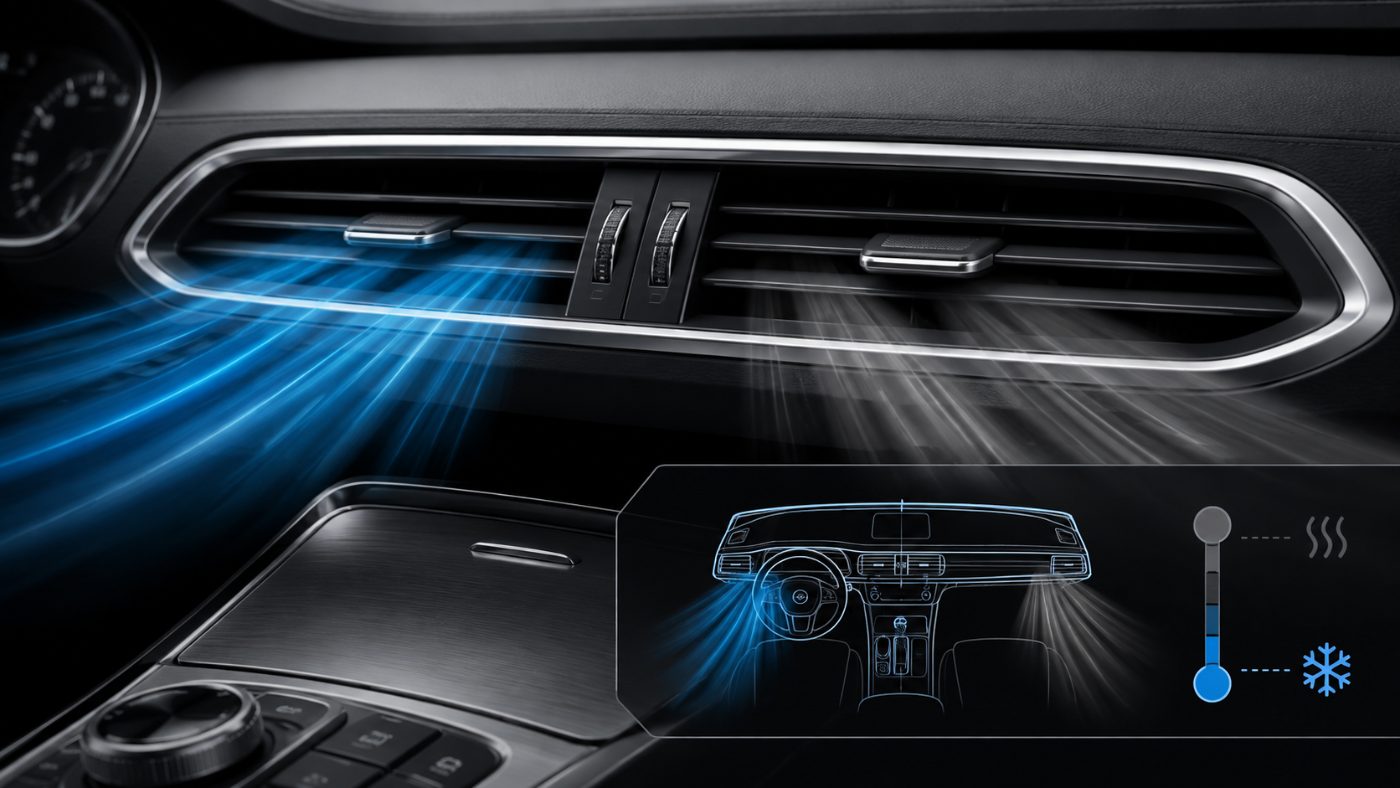
Why low refrigerant can affect cooling performance
An automotive A/C system is sealed and circulates a fixed refrigerant charge. When part of that charge is lost, the system’s ability to absorb cabin heat degrades — and in some dual-zone designs the degradation can present unevenly before it presents as total failure. That is why a side-to-side difference is often the first thing an owner notices.
Whether refrigerant is actually low is a measurement question for a qualified facility, answered with recovery equipment and documented weights — not a conclusion to reach from vent temperature alone. AutoDefect does not publish do-it-yourself charging guidance; refrigerant handling is regulated under the federal MVAC servicing framework.
Conditions that can produce the same complaint
A low charge from any leak point can present as uneven cooling before total loss of cooling.
One possible leak location among several. Requires documented leak testing to identify.
Leak points outside the cabin produce identical charge-loss symptoms.
A faulty flap actuator can blow warm on one side with a perfectly healthy refrigerant circuit.
Electrical faults to actuators or sensors can mimic mechanical failures.
On applicable engines, BMW service information describes control-valve mechanisms producing temperature fluctuation or loss of cooling.
Calibration and control-unit conditions can produce zone differences with no leak at all.

Evidence that raises or lowers the likelihood of an evaporator leak
A graded table is a reasoning aid, not a diagnostic guarantee. Only a qualified facility can diagnose your vehicle.
What owners describe in public threads
Community threads document that owners have publicly discussed uneven cooling with different eventual diagnoses. They are owner reports — not verified engineering findings.
When to obtain a written diagnosis
Before authorizing significant repair spend — and especially before a dashboard-out quote — ask the facility to document:
Uneven vent temperature is a symptom, not an evaporator diagnosis. The registry classifies cases by what the written record establishes.
Experienced this symptom? Document it before it disappears.
Whatever the eventual diagnosis — evaporator or not — your documented case strengthens the record. Alternative diagnoses are preserved with the same care as confirmations.